'/%3E%3C/svg%3E)

 by Bui Trong Nghia
Renting Process in Hanoi – Complete 2026 Guide for Expats
Understanding the renting process in Hanoi is crucial for expatriates, corporate tenants, and relocation clients moving to Vietnam in 2026. While the market offers a wide range of housing options, the lease structure, deposit system, and negotiation practices may differ significantly from Western countries.
This guide explains the renting process in Hanoi step by step, including pricing structure, legal considerations, contract clarity, and common mistakes expats should avoid.
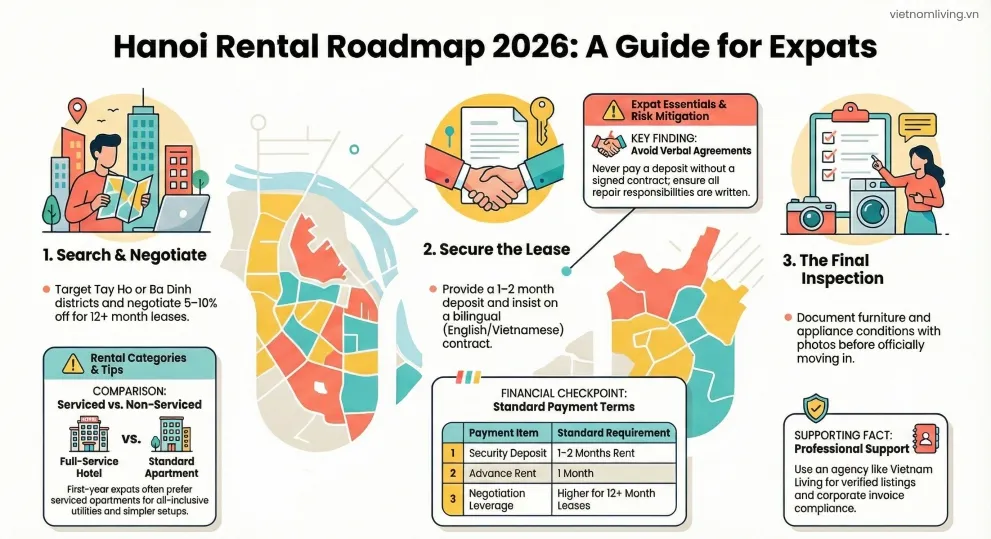
Step 1: Property Search & Viewing
The renting process in Hanoi typically begins with property search and viewing. Tenants can request:
- In-person viewing
- Virtual video tour
- Shortlisted options based on budget and location
In 2026, high-quality apartments in Tay Ho and Ba Dinh move quickly, so timely decision-making is important.
Step 2: Rent Negotiation
Negotiation is a normal part of the renting process in Hanoi. Depending on lease length and market conditions, tenants may negotiate:
- Monthly rental reduction (5–10% for 12+ months)
- Additional furniture requests
- Minor renovation before move-in
- Flexible payment schedule
Longer leases often provide stronger negotiation leverage.
Step 3: Deposit & Payment Terms
Most apartments require:
- 1–2 months security deposit
- 1 month rent paid in advance
The renting process in Hanoi requires careful review of deposit return conditions. Always confirm:
- When deposit will be returned
- Conditions for deductions
- Early termination penalties
Clear written agreement prevents future disputes.
Step 4: Lease Contract Signing
For foreign tenants, English lease contracts are strongly recommended. A professional agency ensures the renting process in Hanoi includes:
- Bilingual contract if necessary
- Clear rental amount and payment schedule
- Defined maintenance responsibilities
- Management fee clarification
- Utility responsibility breakdown
Corporate tenants may require official invoice issuance for accounting compliance.
Step 5: Move-In Inspection
Before moving in, conduct a full inspection:
- Furniture condition
- Appliance functionality
- Water pressure and drainage
- Air conditioning performance
- Photographic documentation
This step is often overlooked but critical within the renting process in Hanoi.
Common Risks Expats Should Avoid
- Paying deposit without signed contract
- Verbal promises not written in lease
- Unclear responsibility for repairs
- Ignoring building management quality
- Underestimating commute time during peak traffic
Professional support significantly reduces these risks.
Serviced vs Non-Serviced Lease Differences
The renting process in Hanoi differs slightly between serviced and non-serviced apartments:
- Serviced apartment: Utilities often included, simpler setup
- Non-serviced apartment: Lower base rent, more detailed utility handling
First-year expats often prefer serviced apartments for convenience.
Why Choose Vietnam Living
Vietnam Living specializes in expat housing in Hanoi and guides clients through every step of the renting process in Hanoi with transparency and professionalism.
- 100% English communication
- Verified property listings
- Clear contract explanation
- Corporate leasing experience
- Long-term after-move support
In 2026, the Hanoi rental market remains competitive. Units change quickly, especially in expat-focused districts. Contact us today for a free consultation and let our advisors guide you safely through the renting process in Hanoi.
To explore available properties, visit Vietnam Living.